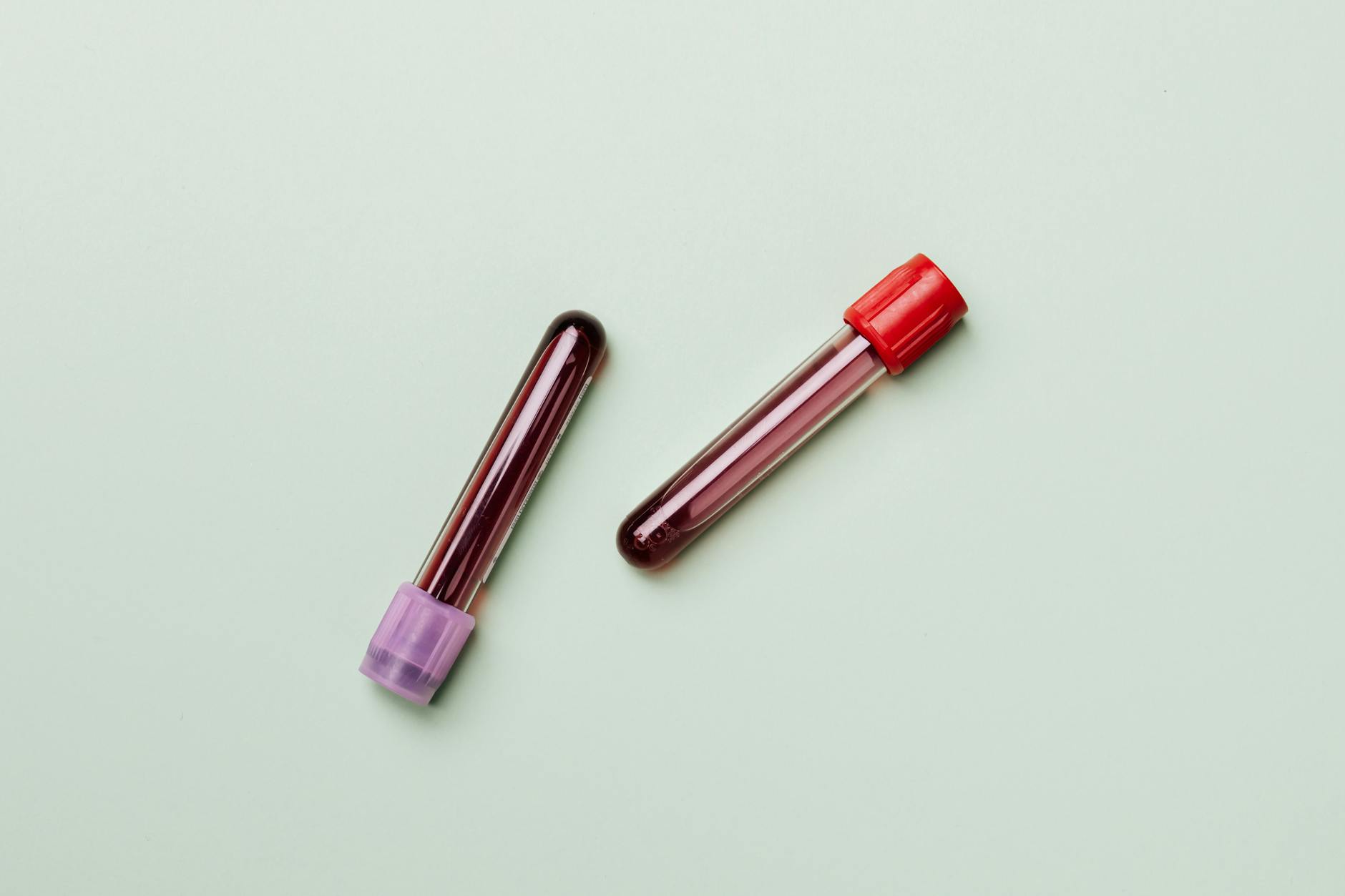
You spit in a tube, mail it back, and a few weeks later an app tells you your “biological age” — often a number conveniently higher than your birthday age, next to a store selling the supplements to fix it. The category is booming. Before you pay, it’s worth separating what you’re buying from what the marketing implies.
How you actually get one
Most biological-age products are direct-to-consumer kits. You order online, collect saliva or a few drops of blood at home, and return it by mail. No prescription, no doctor visit, and no insurance — you pay out of pocket. Published pricing for the better-known epigenetic panels runs roughly $200 to $600 per test, with cheaper “subscribe and re-test” tiers designed to get you buying again every few months.
Two broad product types dominate. Epigenetic clocks measure DNA methylation — chemical tags on your DNA — and run the pattern through an algorithm trained to predict age or mortality risk. Biomarker panels bundle ordinary blood chemistry (inflammation, glucose, lipids, kidney and liver markers) into a single composite “age” score. Both hand you a number that feels precise. The precision is largely cosmetic.
Is the provider legit?
The reputable labs in this space are typically CLIA-certified, the federal standard for clinical laboratory quality in the US. That’s a real credential and worth checking for. But CLIA certifies that a lab runs its process consistently — it does not validate that “biological age” means what the marketing says, or that your result predicts your health.
Crucially, these are lab-developed tests (LDTs), and they are not FDA-cleared or FDA-approved. The FDA had moved to regulate LDTs as medical devices, but a federal court vacated that rule in 2025 and the agency reverted to its prior hands-off posture, per the FDA’s own LDT page. Translation: no federal device review stands between the algorithm and your dashboard. Oversight falls to lab certification and to advertising law.
What the evidence actually supports
Epigenetic clocks are a legitimate and active research tool — for studying populations. Whether they work as a personal readout is a different question, and the literature is openly skeptical. A 2025 commentary in the AMA Journal of Ethics and a review on the limits of epigenetic clocks as personal biomarkers both caution that these tests are not validated to guide individual decisions.
The reliability problem is the one that should shape how you read your result. A 2025 reliability study found that while many clocks reproduce well on identical samples under ideal conditions, some prove far less stable once real-world variables — DNA extraction method, batch effects, or simply re-drawing blood from the same person days apart — enter the picture. If two measurements on you can differ by years, then a “3 years younger” result after a supplement course may be measurement noise, not biology.
How to read the marketing
The federal watchdog here is the FTC, not the FDA. Its Health Products Compliance Guidance requires “competent and reliable scientific evidence” — generally randomized human clinical trials — behind any health or efficacy claim, and says uncertain science must be disclosed clearly. In 2023 the FTC put roughly 670 companies on formal notice via its Notice of Penalty Offenses on substantiation, exposing them to civil penalties for unsupported claims. The agency has separately settled with sellers of “anti-aging” pills that promised to reverse aging.
Practical filters:
- “Reverse your age” / “turn back the clock” — an efficacy claim that needs clinical proof. Ask for the trial, not a testimonial.
- Test bundled with the supplement that fixes your score — a built-in incentive to return a high number. Be skeptical.
- A single decimal-point “age” with no error range — precision theater; ask what the test-retest variation is.
A biological-age test can be an interesting data point and a nudge toward habits that are well-supported anyway. For the interventions people chase to lower the number, look past the vendor’s storefront: longevity peptide science is covered at peptidenewsnetwork.com, fasting protocols at glpfasting.com, and GLP-1 consumer how-to at myglptalk.com. Just don’t mistake a number on a dashboard for proof that any of it worked.
This article is journalism, not medical advice. Medical and legal statements are attributed to the cited authorities. Consult a licensed clinician before acting on any test result.