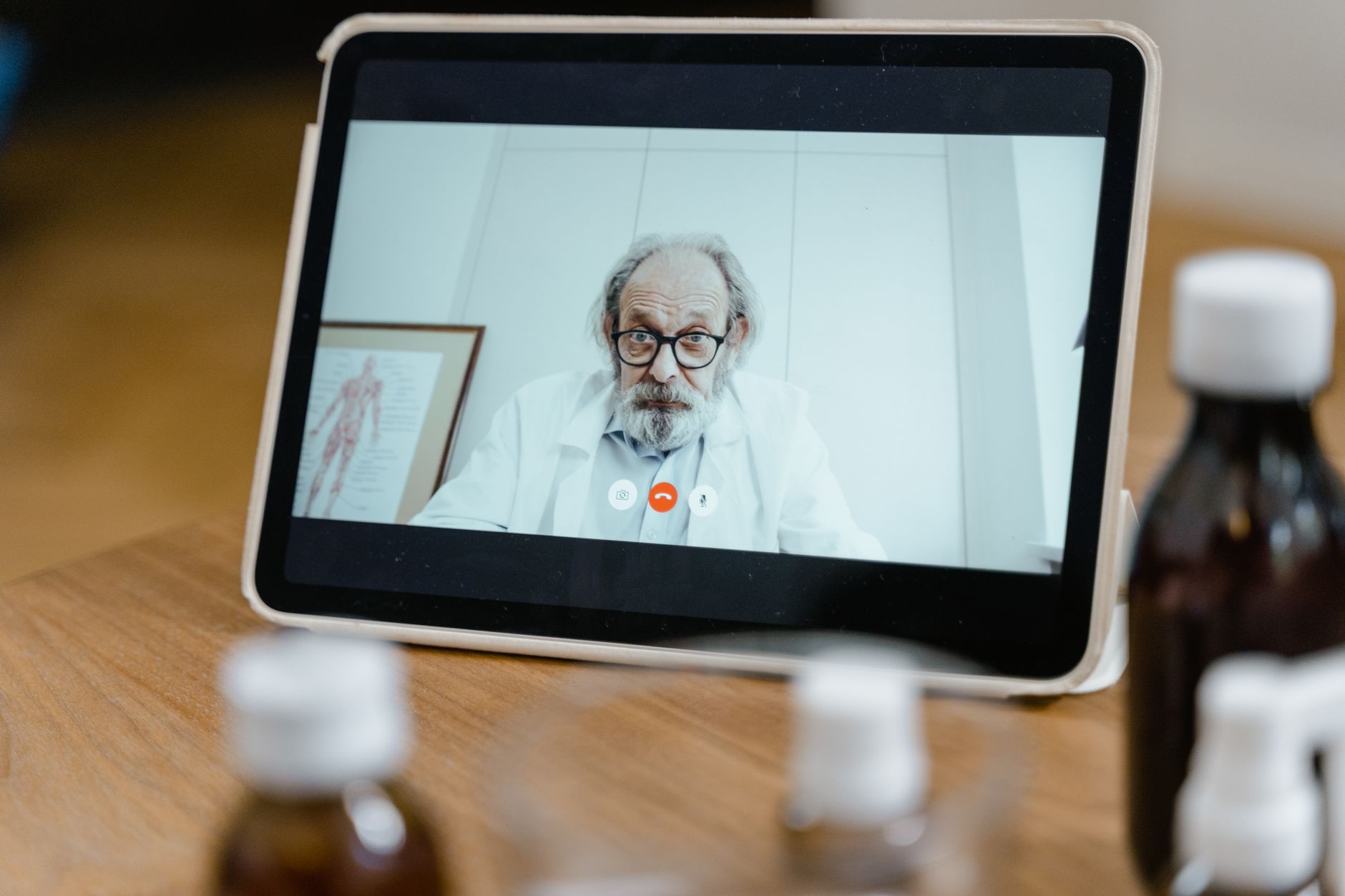
You book a telehealth visit, a clinician you have never met in person evaluates you, and a prescription lands at your pharmacy. It feels borderless. Legally, it is not. The single most important rule in cross-state telehealth is also the least intuitive: the clinician who prescribes to you generally has to be authorized to practice in your state — the one you are physically sitting in — not just the state their office is in.
This is not medical advice. It is a map of the rules, so you can tell a compliant provider from one cutting corners.
The core rule: care happens where the patient is
Most states treat a telehealth encounter as taking place at the patient’s physical location. Because medical licensing is done state by state, that means a clinician usually needs to be licensed — or otherwise legally permitted to practice — in the state where you are located at the time of the visit. The federal government’s own explainer is explicit: a telehealth appointment occurs in the state where the patient is located, and health professionals must be licensed or legally permitted to practice in that state, with limited exceptions (Telehealth.HHS.gov). The Center for Connected Health Policy, which tracks these rules state by state, describes the same default across professions (CCHP).
Practical translation: a legitimate online provider should confirm what state you are in and match you with a clinician authorized to practice there. If a platform never asks where you are — or brags that “location doesn’t matter” — that is a red flag, not a convenience.
The exceptions that soften the rule
The border is not absolute. Two mechanisms give clinicians more reach.
Interstate compacts. The Interstate Medical Licensure Compact (IMLC) covers 44 states plus D.C. and Guam (AMA). A common misconception is that it hands a physician one national license. It does not. As the compact commission and the AMA explain, it simply expedites the process of obtaining a separate full license in each member state — physicians obtain a “letter of qualification” and then request licenses in the states they choose (IMLCC). The upshot for patients: a compact clinician can be licensed in your state faster, but they still must actually hold that state’s license to treat you there.
State telehealth registrations. A number of states — roughly 20, by HHS’s count — let out-of-state clinicians register or otherwise qualify to provide some telehealth without a full local license, under varying conditions (Telehealth.HHS.gov). The specifics differ widely by state and profession, and some pathways are narrow carve-outs rather than open registration. This is exactly the kind of detail to verify against your own state’s medical board rather than a marketing page.
Controlled substances: a separate, temporary layer
Licensing is only half the picture. If your medication is a controlled substance, the DEA adds its own rules on top.
Most GLP-1s (semaglutide, tirzepatide) are not controlled substances, so the DEA layer usually does not apply to them. But testosterone — the basis of online TRT — is a Schedule III controlled substance, and common ADHD and anxiety medications (stimulants and benzodiazepines) are scheduled too. For those, the DEA’s pandemic-era flexibility is what currently allows remote prescribing without a prior in-person exam. On December 31, 2025, the DEA and HHS issued a fourth temporary extension, keeping that flexibility in place through December 31, 2026 (DEA; Federal Register).
Two things patients should take from this. First, it is temporary — a permanent DEA framework, including a proposed special registration for telemedicine, is still being finalized, and the rules for controlled-substance telehealth could tighten (Telehealth.HHS.gov). Second, the DEA flexibility does not override state licensing — a provider still needs to be authorized to practice where you are.
How to check your own provider
- Ask which state the prescribing clinician is licensed in, and confirm it covers yours.
- Verify that license directly on your state medical board’s public “license lookup.”
- Watch for platforms that dodge the location question or route you to a clinician in a distant state with no compact or registration in yours.
For the GLP-1 how-to itself, our sister publication MyGLPTalk covers the consumer walkthrough; here we stick to whether the arrangement is legal. When a provider’s process respects state licensing and the current DEA rules, cross-state telehealth is legitimate. When it treats those rules as optional, that is the story.